
#Articles

Rainy days offer a different atmosphere than sunny days, providing an opportunity to broaden the scope of your photographic work. While rain often carries a negative image, rainy days actually offer many advantages for photographic expression.
This article will introduce shooting scenes unique to rainy days, as well as compositions and techniques that are easy for beginners to master.
What is the appeal of rainy day photography?

Many people might be hesitant to take photos when it rains. However, rainy days actually present a “special stage” for photography. When wet, cityscapes and natural scenery gain increased texture and acquire a unique sense of tranquility and color.
Furthermore, the absence of direct sunlight softens the light, creating natural shadows on the subject and resulting in photos with a soft, muted tone.
Even beginners can easily capture an “atmospheric shot” on a rainy day.
Reasons to take photos on a rainy day
The beauty of the three-dimensional effect and reflections brought about by a wet background

Wet ground and walls reflect light, creating a unique texture. Wet asphalt roads and cobblestones, in particular, become like mirrors, beautifully reflecting streetlights and neon signs.
This transforms familiar street corners and thoroughfares into a fantastical scene, allowing for striking photographs. Furthermore, composing your shots with reflections in mind emphasizes symmetry and depth, resulting in more visually engaging images. Additionally, the wetness deepens the tones of the background colors, creating a calm and sophisticated contrast.
The emotional tone created by the light and humidity of an overcast day
In cloudy or lightly rainy conditions, there is no direct sunlight, and the light falling on the subject is very soft. As a result, shadows are not too harsh, and the texture of people and objects is expressed more naturally.
In addition, the humid air envelops the entire landscape, creating a slightly bluish tone and a misty atmosphere. Such an environment easily creates “stillness,” “gentleness,” and “narrative” in portraits and snapshots, making it easier to bring out the photographer’s intentions. Experiences that involve the five senses, such as the sound of rain and the smell, lead to more impressive photographic expression.
Composition and shooting techniques that won’t fail on rainy days
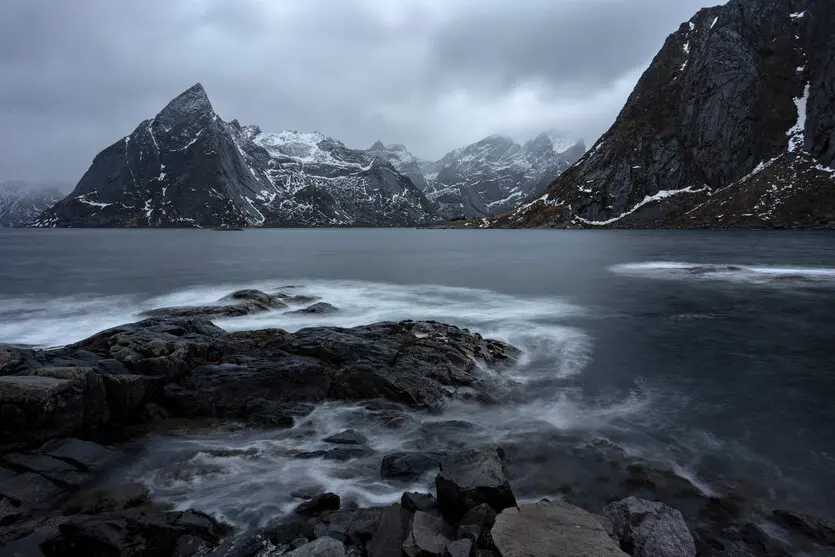
Let’s start by deciding on the image we want to capture
The first step to successful rainy-day photography is to clearly define “what kind of atmosphere you want to capture” before you begin shooting. For example, the composition and settings will be completely different depending on whether you want to photograph a quiet, atmospheric streetscape or a dynamic shot that utilizes the magnificent movement of rain clouds. Once you have a clear image in mind, you can make consistent decisions from selecting the shooting location to choosing the lens and adjusting the shutter speed and aperture.
Visualize the finished photograph in your mind before you start shooting. That’s the first step to enjoying rainy-day photography.
Controlling the depiction of rain with shutter speed
To capture the presence of rain, it’s more effective to focus on “where the rain is lingering” and “how it’s moving” rather than simply aiming at raindrops falling into the sky.
For example, focusing on raindrops collected on a windowpane or leaves and blurring the background can emphasize a moist, atmospheric feel. Also, when aiming to capture a single drop of rain falling from an awning, setting a fast shutter speed (around 1/1000 of a second) to sharply capture the moment the drop falls will create a sense of dynamism. Conversely, if you want to impressively capture the “ripples” created by rain falling into a puddle, using a slightly slower shutter speed (around 1/60 of a second) to leave a soft blur will enhance the atmosphere. Thus, the key to rain photography is the technique of capturing the texture and presence of rain by using both stillness and movement.
Composition ideas unique to rainy weather

When composing a photo on a rainy day, the key is to skillfully incorporate elements like umbrellas and puddles. For example, making a colorful umbrella the main subject can add a pop of color to a rainy landscape that tends to be dominated by gray tones. You can also use puddles to create a symmetrical representation of your subject, or blur the background to create a dreamy effect. Furthermore , it’s recommended to use “unseen compositions,” such as showing a person’s back or a viewpoint through an umbrella, to create a sense of narrative.
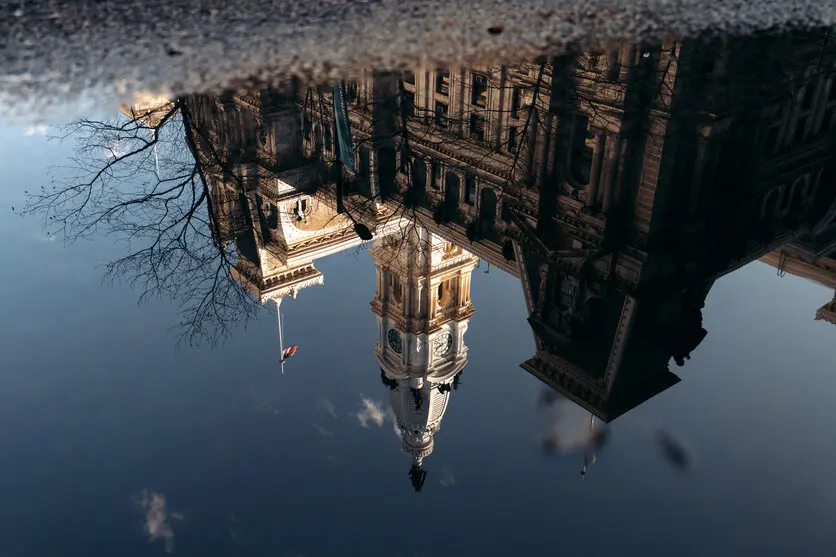
Creating a rainy background effect using foreground and background bokeh

To effectively use rain as a background, controlling the depth of field is essential. By using a telephoto lens or a lens with a small aperture, and focusing on the subject while blurring raindrops or umbrellas in the foreground or background, you can create a sense of depth and dimension. This type of bokeh is very effective in conveying a moist, atmospheric feeling. Furthermore, by incorporating streetlights or window lights in the background, the raindrops will appear as bokeh, emphasizing a fantastical atmosphere.
Settings and safety precautions to take on rainy days
Basic camera settings: ISO, white balance, exposure
On rainy days, the amount of light tends to be low, so it’s essential to slightly increase the ISO sensitivity to ensure a fast shutter speed (e.g., ISO 400-800). Also, using a white balance setting like “cloudy” is key to naturally adjusting the color tone, which tends to lean towards cool tones. By slightly reducing the exposure compensation, you can suppress overexposure on wet surfaces and reflected light, resulting in a calm tone that is characteristic of rainy days. When the exposure balance is just right, the damp atmosphere unique to rainy days will be further enhanced.
You can still enjoy taking photos even on rainy days
Rain isn’t an obstacle to photography; rather, it’s an opportunity for expression. With careful composition and settings, you can capture depth and tranquility that you wouldn’t get on a sunny day. With waterproofing and some creativity, you can enjoy shooting even on rainy days. So, try capturing those fleeting moments that can only be found in the rain with your lens.
Safety measures and equipment protection points
When shooting in the rain, the first thing to be careful about is waterproofing your equipment. Simple protection with a rain cover or freezer bag is effective, and it’s a good idea to bring a spare cloth or absorbent towel. In addition, attaching a lens hood will prevent raindrops from getting on the front element and prevent a decrease in image quality. Also, on slippery ground or stairs, it is important to use a tripod or strap to ensure stability. When choosing a shooting location, try to select a safe place with a roof or little foot traffic whenever possible.

